

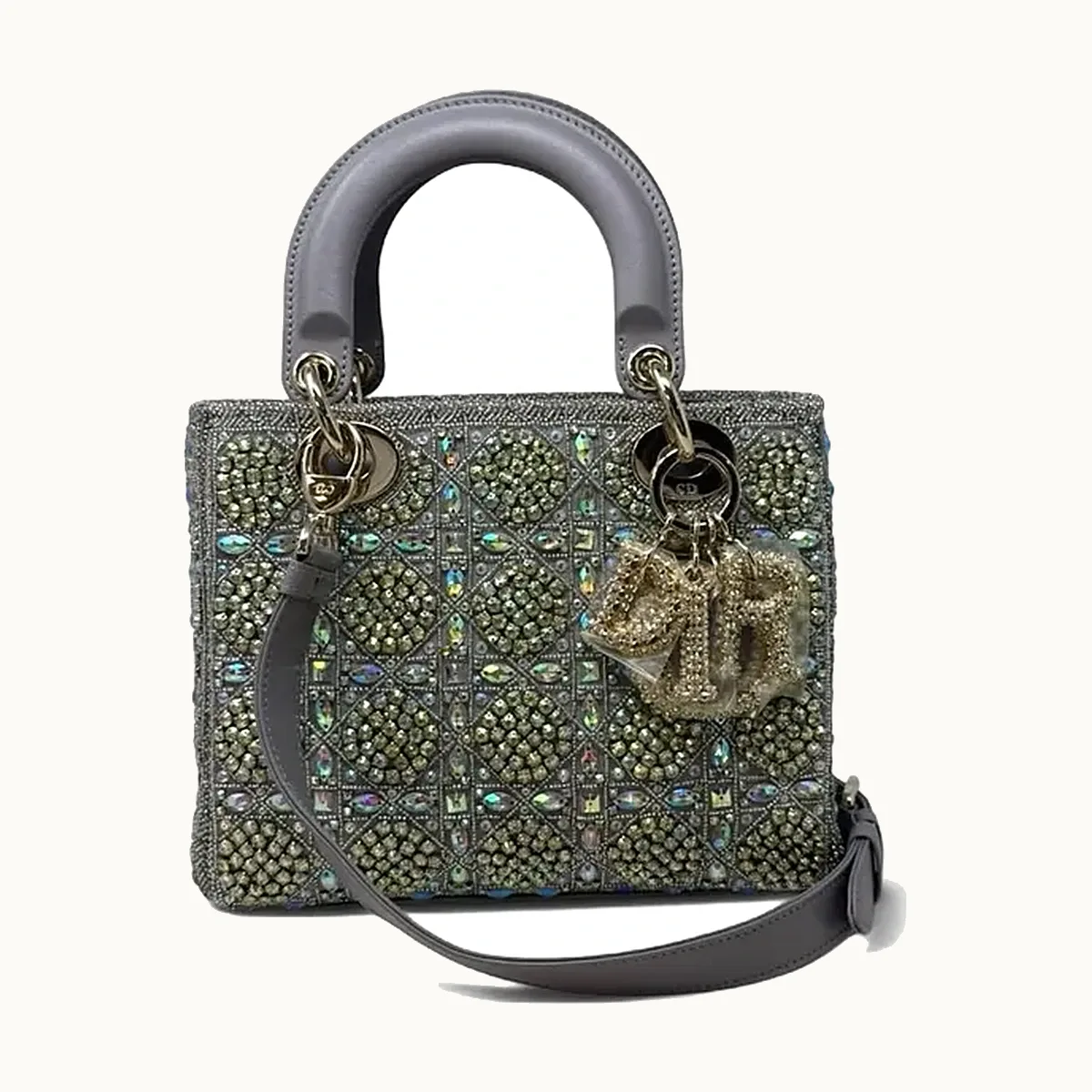
In Mexico, the passenger allowance, the franquicia, is US$500 by air or sea all year round, and US$300 by land outside the holiday periods, according to the information published by the Agencia Nacional de Aduanas de México as of September 2026. In Costa Rica, the traveller exemption under Article 115 is equivalent to about US$500 and applies only if you spent at least 72 hours outside the country and did not use it in the previous six months, according to the regulation published by the Procuraduría General de la República.
With a luxury bag, that amount is used up by a single piece. The rest is the rules for the excess. They change, so everything below carries a date, and the official page on the day you travel is the one that counts.
Mexico
The allowance
According to ANAM’s luggage and allowance page, as of September 2026, a passenger can bring in goods in addition to their personal luggage, with the value proven by an invoice or sales receipt, without paying tax, up to US$500 when arriving by air or sea. That amount applies all year.
By land, the allowance is US$300 outside the holiday periods. ANAM publishes which periods those are and what applies during them; we do not reproduce it here because it changes every year. If you are entering by road during a holiday, check the page that day.
Value is proven with the invoice or sales receipt. If you do not have it, customs determines the value. That is one more reason to keep the receipt for a bag bought abroad, on top of the reasons that count towards proving it is genuine.
The excess
If the value of what you bring exceeds the allowance, ANAM describes a passenger procedure, without a customs broker, for goods up to US$3,000, or US$4,000 if they include computer equipment. A flat rate of 19 percent is paid on the excess, meaning on what goes beyond the allowance.
An example with those figures. A US$2,000 bag, with an invoice, arriving by plane. The first US$500 fall within the allowance. On the remaining US$1,500 you pay 19 percent, which is US$285. That is arithmetic done on the figures from ANAM’s page. The exchange rate and the method of payment are set by customs.
Above US$3,000, the page we read describes no passenger procedure. If you are going to bring in a piece of that value, ask ANAM before you fly, not in the queue.
What counts as “personal luggage”
ANAM’s page distinguishes between personal luggage and the additional goods that fall under the allowance. What counts as personal luggage is defined by ANAM itself in a list we do not reproduce here. Whether the bag you are travelling with was yours before the trip or was bought abroad is a distinction worth being clear on before you reach the inspection point, and the official list is the one that counts.
Costa Rica
The traveller exemption
According to the regulation published by the Procuraduría General de la República, Article 115 grants the traveller an exemption equivalent to about US$500, with conditions the Mexican allowance does not have.
You must have stayed outside the country for at least 72 hours. If you are returning from Panama through Paso Canoas, the minimum drops to 48 hours.
You must not have used it in the previous six months.
And the exemption is non-waivable, non-transferable and non-cumulative. Non-transferable means you cannot add another traveller’s exemption to yours to cover a single piece. Non-cumulative means two trips do not give you a thousand dollars. Each trip, if it meets the conditions, has its own 500.
An example. You buy a US$1,200 bag on a one-week trip. The first US$500 come in under the exemption, if you have not used it in the past six months. The rest pays whatever customs determines. How much that is does not appear in the source we read for this guide, so we do not put a figure on it.
What we did not find
The procedure and the rate for the excess in Costa Rica are not in the regulation we consulted. Before travelling with a piece of value, ask Costa Rican customs what is paid on what goes beyond the exemption.
Two things outside this guide
Commercial import. Everything above is for a passenger bringing something in for themselves. If you buy pieces to resell, the rules are different, with their own tariff classification, and we do not cover them here because we did not verify them.
Counterfeits. A bag passing the allowance says nothing about whether it is genuine, and bringing in a copy is a separate legal matter from paying tax. What the law says about that in both countries is in our guide on the law, not here.
Checklist before you fly
- Keep the invoice or sales receipt for every piece. In Mexico it proves the value; without it, customs sets it.
- Add up the value of everything that is not personal luggage. In Mexico, US$500 by air or sea, US$300 by land outside holidays.
- Mexico, excess up to US$3,000. Work out 19 percent on what goes beyond the allowance and have it ready.
- Mexico, more than US$3,000. Ask ANAM before you travel.
- Costa Rica. Count the hours away, 72 in general, 48 from Panama through Paso Canoas.
- Costa Rica. Count the months. If you used the exemption in the last six, you do not have it.
- Costa Rica. Do not add companions’ exemptions or those from earlier trips.
- Amounts change. The above is as of September 2026. The official page on the day you travel is the one that counts.
This guide covers what you bring in yourself. Pieces from the Kove catalogue, at /en/bags/, are delivered in Mexico and in Costa Rica.
Sources
- https://www.anam.gob.mx/equipaje-y-franquicia/
- https://www.anam.gob.mx/pago-de-contribuciones-por-excedente-de-franquicia-de-pasajeros/
- http://www.pgrweb.go.cr/DOCS/NORMAS/1/VIGENTE/S/2000-2009/2000-2004/2004/D45A/CC408.HTML